October 26, 2026
Bathroom Tile Ideas: 30 Beautiful Designs for Floors, Walls & Showers

Bathroom tile can influence almost everything about how a bathroom looks and feels.
The right tile can make a small bathroom appear more open, turn a shower into the room's focal point, introduce texture without adding clutter, or create a neutral foundation that works with changing styles for years.
But choosing bathroom tile isn't simply about finding a pattern you like.
You also need to consider where the material will be used, how much maintenance you're comfortable with, how the colors coordinate with the vanity and fixtures, and whether the surface is appropriate for a wet bathroom environment.
That's especially important when considering shower tile. Traditional tile can create beautiful results, but grout joints introduce additional cleaning and maintenance. Homeowners prioritizing easier upkeep may also want to compare tile with modern shower-wall systems that can provide a tile- or stone-inspired appearance with fewer grout lines.
Whether you're planning a complete bathroom remodel or simply looking for bathroom tile ideas, this guide covers 30 design possibilities for bathroom floors, walls, showers, walk-in showers, and small spaces.
Let's start with the ideas.
1. Large-Format Stone-Look Tile
Large-format stone-inspired tile is a strong option for homeowners who want an elegant bathroom without an overly complicated pattern.
Larger pieces create fewer visual interruptions across the surface, which can help the room feel cleaner and more continuous.
Popular appearances include:
- Marble-inspired patterns
- Limestone looks
- Travertine-inspired finishes
- Soft concrete effects
- Warm natural-stone patterns
Large-format materials can work particularly well on shower walls because the larger pattern has room to develop.
For a modern bathroom, consider a light stone appearance with warm wood cabinetry and simple fixtures.
2. Classic White Subway Tile
White subway tile remains one of the most recognizable bathroom wall tile ideas.
Its strength is flexibility.
It can work in traditional, transitional, farmhouse-inspired, and contemporary bathrooms depending on the layout, grout, fixtures, and surrounding materials.
A traditional horizontal layout creates a familiar look, while vertical or stacked layouts can make the same basic tile feel more contemporary.
Pair white subway tile with:
- Wood vanity cabinetry
- Black fixtures
- Chrome fixtures
- Navy cabinetry
- Green cabinetry
- Neutral flooring
If you're concerned about maintenance, remember that smaller traditional tiles generally create more grout joints than large-format surfaces or grout-reducing shower-wall systems.
3. Marble-Look Bathroom Tile
Marble has long been associated with elegant bathrooms, and marble-inspired surfaces can bring similar visual movement into a remodel.
White backgrounds with subtle gray or warm veining are particularly versatile.
You can use a marble look on:
- Shower walls
- Bathroom floors
- Feature walls
- Vanity backsplashes
The key is restraint.
If your shower walls already have dramatic veining, using another strong pattern on the floor can create visual competition.
Consider allowing one surface to be the focal point while keeping the others simpler.
4. Warm Beige Bathroom Tile
Not every bathroom needs to be white or gray.
Warm beige is a useful choice for homeowners who want a softer, more inviting atmosphere.
Beige tile can coordinate beautifully with:
- Cream walls
- Warm white
- Natural wood
- Taupe cabinetry
- Brass-toned accents
- Brushed nickel
It can also be particularly effective when you're trying to create a spa-inspired bathroom.
Rather than choosing a flat beige, look for subtle tonal variation that creates depth without becoming visually busy.
5. Vertical Shower Tile
One of the simplest ways to give familiar tile a more contemporary appearance is changing its orientation.
Vertical tile naturally draws the eye upward.
That can make it particularly interesting for a walk-in shower or a bathroom with a lower ceiling.
Vertical arrangements work with:
- Subway tile
- Rectangular stone-look tile
- Narrow-format tile
- Textured wall tile
The pattern can be used across the entire shower or only as an accent.
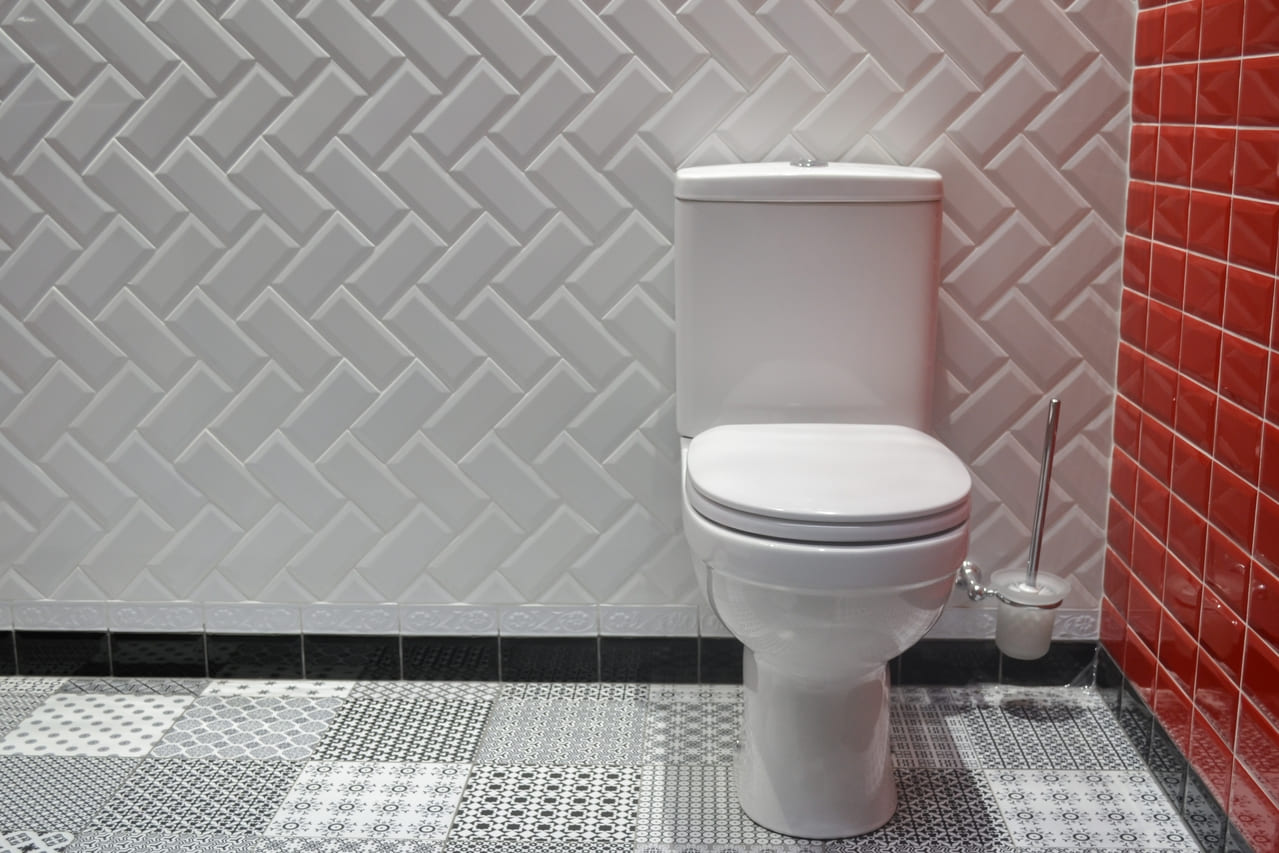
6. Herringbone Bathroom Tile
Herringbone creates movement by arranging rectangular pieces in an angled repeating pattern.
It's an excellent way to add detail without introducing several different colors.
Possible applications include:
- Shower accent walls
- Vanity backsplashes
- Feature walls
- Selected floor areas
Because herringbone creates a lot of visual movement and typically involves numerous joints, it often works best as an accent rather than covering every surface.
Pair it with simpler surrounding materials to keep the bathroom balanced.
7. Hexagon Bathroom Floor Tile
Hexagonal tile introduces geometric character while remaining relatively versatile.
Depending on its size and color, hex tile can look traditional or modern.
Common choices include:
- White
- Black
- Gray
- Marble-inspired
- Beige
- Muted green or blue
If you're considering hexagon bathroom floor tile ideas, pay attention to both aesthetics and practical flooring requirements.
Bathroom floors need materials and finishes suitable for the intended application, especially in areas where water may be present.
8. Black and White Bathroom Tile
Black and white creates one of the strongest bathroom color combinations.
There are several ways to use it.
You could choose:
- White shower walls with black accents
- Black-and-white patterned flooring
- White tile with darker grout
- A mostly white bathroom with a black tile feature
Because the contrast is already strong, avoid introducing too many unrelated patterns.
Warm wood can also soften the starkness of a black-and-white palette.
9. Wood-Look Bathroom Tile
Wood brings warmth to bathrooms, but real wood isn't always appropriate for every wet-area application.
Wood-look tile can provide a similar visual character while using a surface intended for the specific bathroom application when properly selected.
It can work particularly well on bathroom floors.
Popular appearances range from pale oak to richer brown wood tones.
Pair wood-inspired flooring with light shower walls to create a balanced bathroom that feels warmer than an all-gray design.
10. Light Gray Bathroom Tile
Gray remains useful because it works with many colors and fixture finishes.
Light gray can provide more depth than white without dramatically darkening the bathroom.
Try combining it with:
- White
- Natural wood
- Navy
- Soft green
- Matte black
- Chrome
- Brushed nickel
Pay attention to undertones.
Some gray surfaces lean blue or cool, while others contain warmer beige undertones.
Those differences become much more noticeable once large surfaces are installed.
11. Dark Charcoal Bathroom Tile
Charcoal can add drama and sophistication.
It tends to work best when the bathroom has enough lighter surfaces to balance it.
For example:
Charcoal floor + white shower walls + warm wood vanity
This provides contrast while preventing the entire room from becoming visually heavy.
Dark materials may also show certain types of residue differently than lighter surfaces, so consider maintenance alongside appearance.
12. Blue Bathroom Tile
Blue is a natural fit for bathrooms because it can range from subtle and relaxing to dramatic.
Popular choices include:
- Pale blue
- Dusty blue
- Blue-gray
- Navy
- Deep ocean blue
For a quieter bathroom, use blue as an accent.
For a stronger design, a blue feature wall in the shower can become the focal point.
Coordinate the shade with the vanity, flooring, and wall paint rather than selecting it independently.
13. Green Bathroom Tile
Green has become a popular bathroom design color because it pairs naturally with wood, cream, white, beige, and warm metallic finishes.
Sage provides a subtle look.
Olive feels warmer and earthier.
Deep green creates stronger drama.
A green tiled accent can work particularly well when the rest of the bathroom uses neutral materials.
14. Textured Bathroom Wall Tile
Bathroom walls don't need to rely entirely on color for interest.
Texture can create depth even when the palette is neutral.
Examples include:
- Fluted surfaces
- Linear textures
- Subtle raised patterns
- Stone-inspired relief
Textured surfaces can be particularly effective behind a vanity or on a feature wall.
However, think about cleaning requirements before using heavily textured materials in areas exposed to frequent water, soap, or residue.
15. Floor-to-Ceiling Shower Tile
Extending a shower-wall finish upward can create a more complete, intentional appearance.
Floor-to-ceiling treatments are especially effective with:
- Large-format stone patterns
- Marble-inspired surfaces
- Vertical rectangular tile
- Neutral colors
The approach can also emphasize ceiling height.
If you're remodeling a shower, consider how the wall material will look across the entire vertical surface rather than focusing only on a small sample.
16. Walk-In Shower Tile With a Built-In Niche
A shower niche provides storage while also creating an opportunity for design detail.
You can either make the niche blend in or turn it into an accent.
For a seamless appearance, continue the same wall material through the niche.
For contrast, use a coordinating pattern or color inside it.
When looking at walk-in shower tile ideas, remember that the niche should first be functional.
Make sure its location and dimensions work for the products your household actually uses.
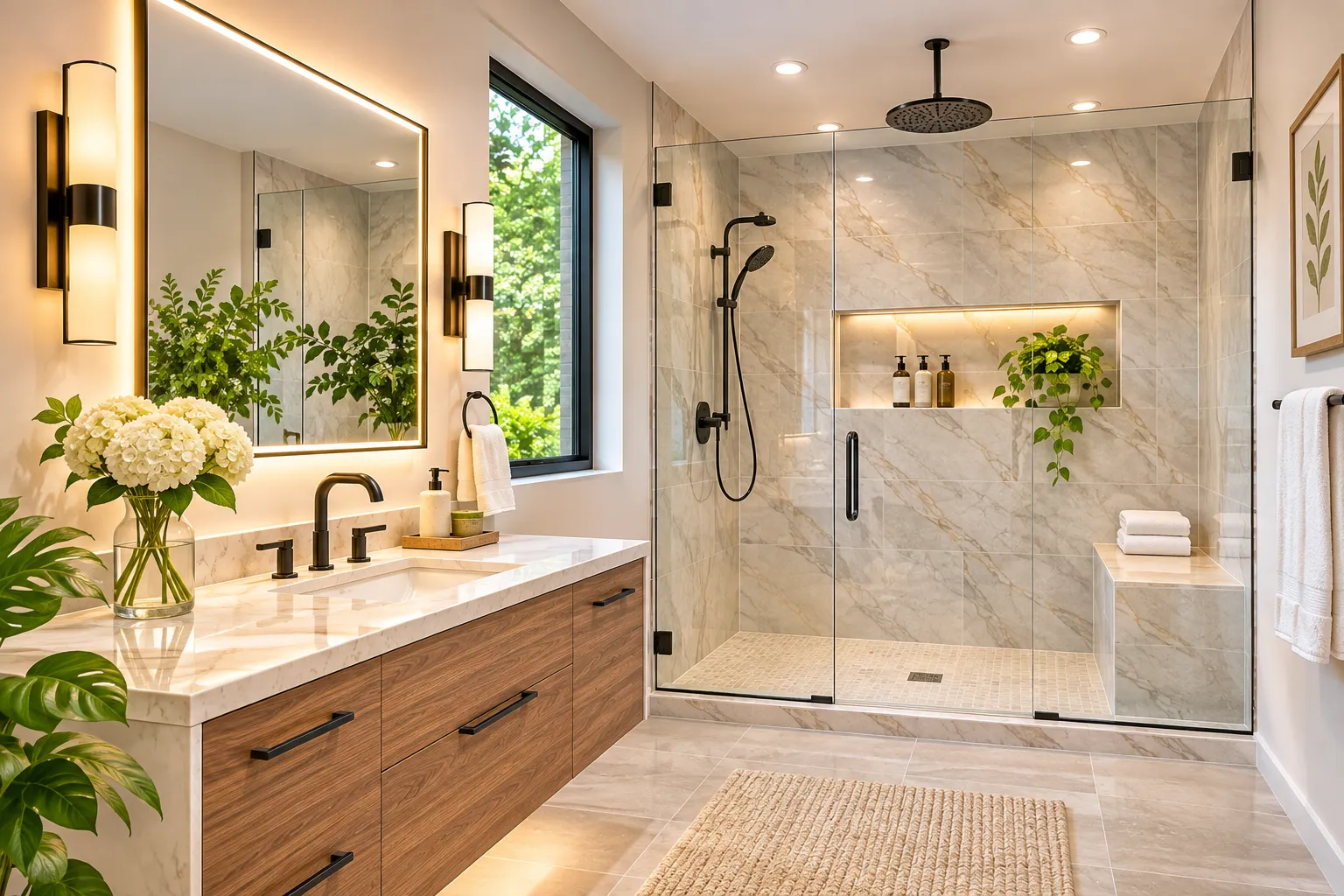
17. Neutral Shower Tile With Matte-Black Fixtures
A neutral shower can become much more distinctive when paired with contrasting fixtures.
Light gray, cream, white, or subtle stone-inspired walls provide an excellent background for matte-black:
- Showerheads
- Handheld fixtures
- Controls
- Grab bars
- Glass hardware
Repeating black elsewhere in the bathroom—such as on cabinet hardware or the mirror frame can make the combination feel intentional.
18. Warm Shower Tile With Brushed-Metal Fixtures
If matte black feels too strong, warm neutral shower walls can work beautifully with brushed-metal fixtures.
Beige, ivory, warm stone, and greige provide an inviting background.
This is particularly effective when combined with natural wood cabinetry.
The result can feel softer and more spa-inspired than a high-contrast black-and-white bathroom.
19. Pebble-Look Shower Floor
Pebble-style flooring can create a natural, spa-inspired appearance.
It introduces texture and movement into the shower floor while contrasting with larger, simpler wall surfaces.
However, this is an example where design and maintenance need to be considered together.
Smaller pieces generally mean more joints, so homeowners should understand the cleaning and upkeep requirements before selecting a highly detailed shower floor.
20. Matching Bathroom Floor and Shower Colors
The floor and shower don't have to use identical materials.
Sometimes simply repeating a color is enough to connect them.
For example, a shower wall with warm gray veining can coordinate with a warm gray floor.
A cream shower can connect to beige flooring.
This creates cohesion without making the room look like every surface was covered with the same product.
21. Contrasting Shower and Bathroom Floor
Contrast can also work beautifully.
Try:
Light shower + dark floor
or:
Neutral floor + dramatic shower wall
The key is deciding which surface should receive the most attention.
If the shower has a dramatic marble-inspired pattern, a simple floor often provides better balance than another highly decorative pattern.
22. Small-Format Mosaic Accent Tile
Mosaics can add personality in small doses.
Possible uses include:
- Shower niches
- Vanity backsplashes
- Narrow accent strips
- Feature areas
Because mosaics contain many individual pieces and joints, using them selectively can provide visual detail without making maintenance unnecessarily complicated throughout the entire shower.
23. Geometric Bathroom Tile
Geometric patterns can make a bathroom feel more contemporary.
Hexagons, diamonds, angular patterns, and repeating shapes can create a focal point without requiring a bright color.
For a balanced result, combine a geometric feature with simpler surrounding surfaces.
A patterned floor, for example, may work best with neutral shower walls.
24. Soft Greige Bathroom Tile
Greige sits between gray and beige, making it a flexible choice when you want a neutral that doesn't feel excessively cool.
It pairs particularly well with:
- Warm white
- Natural wood
- Cream
- Matte black
- Brushed nickel
- Muted green
Greige can work on both bathroom floors and shower walls depending on the product and intended application.
25. Terrazzo-Inspired Bathroom Tile
Terrazzo-inspired surfaces introduce multiple colors through small chips or speckles.
They can be playful without relying on one dominant pattern.
Because terrazzo already contains visual activity, coordinate it with simple cabinetry and wall colors.
Pull one of the subtle colors from the terrazzo into the surrounding bathroom for a more cohesive palette.
26. Checkerboard Bathroom Flooring
Checkerboard floors can create a classic or playful look depending on the colors selected.
Black and white is the most recognizable combination, but lower-contrast options can be easier to integrate into a modern bathroom.
Consider:
- Beige and cream
- Gray and white
- Taupe and ivory
Keep the shower relatively simple if the floor is the main pattern.
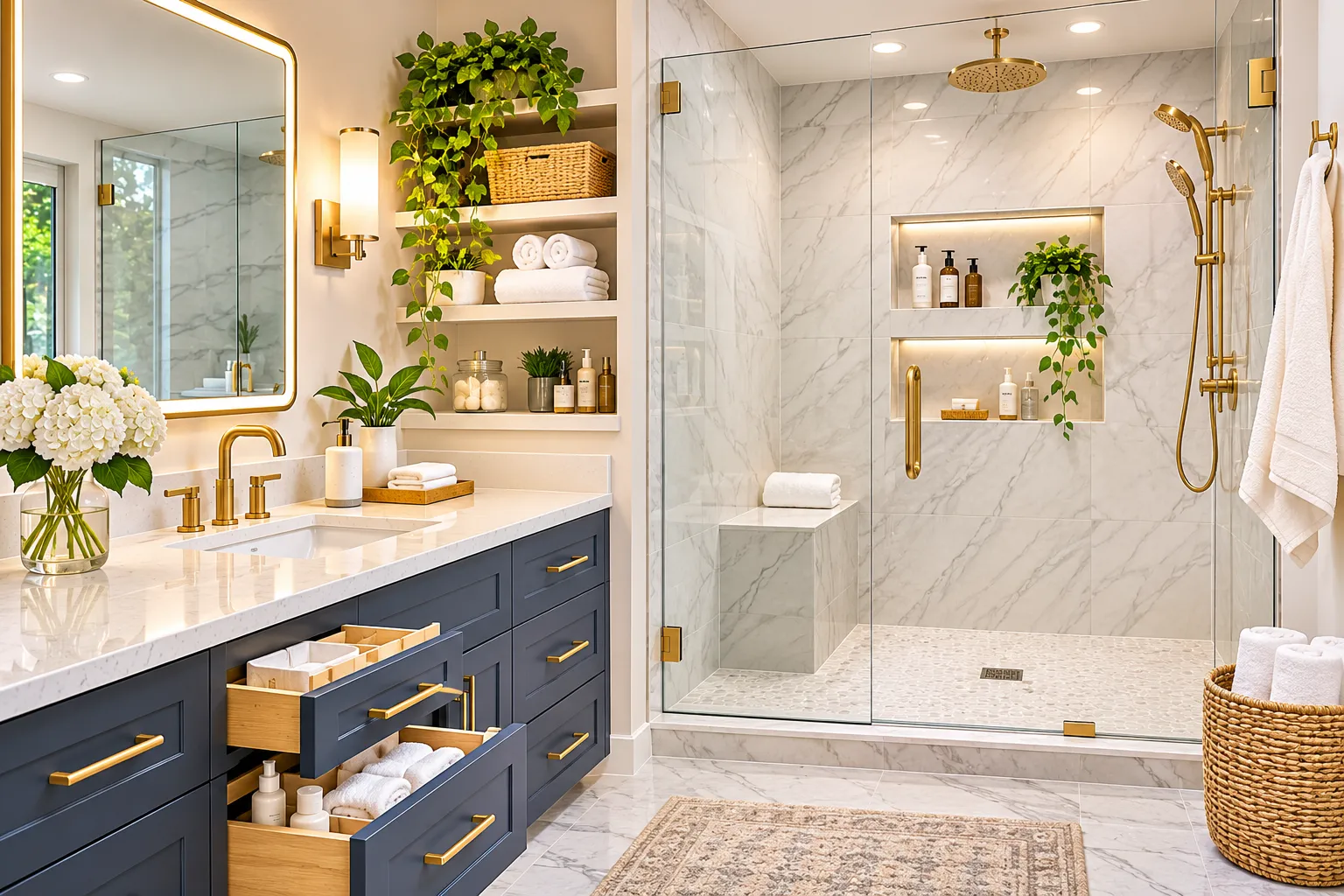
27. Marble-Look Walk-In Shower With Clear Glass
A marble-inspired shower becomes much more visible when paired with clear glass.
This is particularly effective when the shower is intended to be the bathroom's main design feature.
Clear glass allows the wall pattern to remain part of the room even when you're standing outside the shower.
A warm wood vanity can soften the stone appearance and prevent the bathroom from feeling overly cold.
For more shower-specific inspiration, explore our Walk-In Shower Ideas to Transform Your Bathroom.
28. Minimalist Large-Format Bathroom Tile
Minimalist bathrooms benefit from fewer visual interruptions.
Large-format surfaces in neutral colors can help create that effect.
Consider:
- Warm white
- Pale gray
- Greige
- Light stone
- Soft beige
Pair them with simple fixtures and restrained cabinetry.
The goal isn't to remove all personality. It's to let proportion, material, and texture create the interest rather than multiple competing patterns.
29. Bold Shower Feature Wall
If you want a dramatic bathroom but don't want every surface to be bold, concentrate the design on one shower wall.
Potential feature-wall ideas include:
- Deep green
- Navy
- Strong marble pattern
- Geometric design
- Vertical texture
- Contrasting stone appearance
Keep adjacent shower surfaces quieter so the feature wall has room to stand out.
30. Neutral Tile With a Colorful Vanity
One of the safest ways to combine long-term flexibility with personality is keeping harder-to-replace surfaces neutral and adding color through cabinetry.
For example:
Warm white shower + beige floor + sage vanity
or:
Light gray shower + neutral floor + navy vanity
or:
Cream shower + warm floor + deep green vanity
If you eventually want a different color scheme, changing cabinetry or wall paint may be easier than replacing major wet-area surfaces.
Small Bathroom Tile Ideas
Tile selection becomes especially important when space is limited.
A small bathroom doesn't necessarily require tiny tile. In fact, too many grout lines and patterns can sometimes make a compact room feel visually busier.
Use Larger Surfaces for Visual Continuity
Large-format materials can create longer uninterrupted visual lines.
This can help a small bathroom feel cleaner and less fragmented.
Light stone, warm white, pale gray, and greige are particularly versatile choices.
Coordinate Floor and Wall Undertones
Your bathroom floor doesn't need to match your shower exactly, but the materials should work together.
For example, combining a cool blue-gray floor with very warm yellow-beige shower walls may create an unintended clash.
Look for compatible undertones.
Consider Light Colors
Popular small bathroom tile ideas include:
- White
- Cream
- Light gray
- Pale greige
- Soft beige
- Light stone patterns
These shades can help maintain brightness.
However, a small bathroom doesn't have to be entirely light.
A darker floor or shower accent can provide useful contrast.
Use Patterns Strategically
A bold pattern can work in a small bathroom, but consider limiting it to one area.
For example:
Patterned floor + simple shower
or:
Neutral floor + shower feature wall
This keeps the room interesting without creating too many competing focal points.
Let the Shower Remain Visible
If you're installing a walk-in shower, clear glass can help maintain sightlines through the bathroom.
That means your shower walls become part of the overall room design.
For additional space-saving strategies, see our Small Bathroom Remodel: Cost, Ideas & Space-Saving Tips guide.
Small Bathroom Shower Tile Ideas
A compact shower presents its own design challenges.
The goal is often to create interest without making the enclosure feel visually crowded.
Use Vertical Lines
Vertical rectangular tile can draw the eye upward and emphasize height.
Choose a Simple Main Surface
Use a simple wall surface as the foundation, then introduce detail through a niche or feature section.
Limit the Number of Patterns
A small shower doesn't need patterned walls, patterned flooring, a mosaic niche, and decorative borders simultaneously.
Choose one or two features to lead the design.
Coordinate Grout Carefully
Grout color can dramatically affect how visible the tile pattern becomes.
High-contrast grout emphasizes every individual piece.
Low-contrast grout creates a more continuous appearance.
This makes grout an important design decision rather than merely a technical detail.
Bathroom Floor Tile Ideas
Bathroom flooring needs to combine appearance with practical performance.
Before choosing a product based only on an online image, confirm that it is appropriate for the intended floor application and bathroom environment.
Popular bathroom floor tile ideas include:
Stone-Look Flooring
Creates an organic appearance and works with many design styles.
Large-Format Neutral Flooring
Provides a cleaner, more contemporary appearance.
Hexagon Flooring
Adds geometric interest.
Checkerboard Flooring
Creates a stronger design statement.
Wood-Look Flooring
Adds warmth and contrasts beautifully with light shower walls.
Terrazzo-Inspired Flooring
Introduces subtle color and pattern.
Dark Flooring
Can ground a bright bathroom and create contrast.
The right choice depends on the bathroom's size, shower design, cabinetry, lighting, and maintenance expectations.
Bathroom Wall Tile Ideas
Wall tile can be used far beyond the traditional shower surround.
It can also appear:
- Behind the vanity
- As a backsplash
- On a feature wall
- Around a bathtub
- On selected architectural surfaces
The advantage is durability and design flexibility, but you don't necessarily need to tile every wall.
Combining selected tiled areas with painted surfaces can provide more visual balance and make future color updates easier.
Bathroom Shower Tile Ideas
The shower is often the most visually prominent part of a bathroom remodel.
That's why bathroom shower tile ideas deserve more consideration than simply choosing a color.
Think about the complete composition.
Shower Wall Color
Should the shower blend into the bathroom or become the focal point?
Tile Size
Smaller pieces create more pattern and typically more joints. Larger pieces can create a more continuous look.
Pattern
Do you want stone-inspired movement, geometric detail, texture, or a relatively uniform surface?
Fixtures
Black, chrome, brushed nickel, and warm metallic finishes can each change how the same shower-wall color appears.
Glass
Clear glass showcases the wall material, while other enclosure choices may reduce how visible the shower design is from the rest of the bathroom.
Storage
Niches and shelves should be incorporated into the design rather than treated as an afterthought.
When planning a shower remodel, consider all these elements together.
Walk-In Shower Tile Ideas
Walk-in showers give homeowners an opportunity to create a more visually open bathing area.
Some effective walk-in shower tile ideas include:
- Large-format stone-inspired walls
- Vertical rectangular patterns
- Neutral walls with a contrasting niche
- Marble-inspired wall surfaces
- Warm beige designs
- Light walls with matte-black fixtures
- Neutral walls with clear glass
- A single bold feature wall
If the shower occupies a large portion of the room, avoid choosing the material in isolation.
View samples next to the bathroom flooring, vanity finish, countertop, and wall color.
This helps create a bathroom that feels coordinated rather than assembled one product at a time.
Modern Bathroom Tile Ideas
Modern bathrooms often emphasize clean lines, simple palettes, and intentional contrast.
That doesn't mean they have to be cold or colorless.
Popular modern bathroom tile ideas include:
Large-Format Surfaces
Fewer visual interruptions create a streamlined appearance.
Warm Neutrals
Beige, cream, taupe, and greige can make a modern bathroom feel more inviting.
Stone-Inspired Patterns
These add movement without relying on small decorative motifs.
Vertical Layouts
Vertical rectangular patterns can create a contemporary architectural feel.
Matte-Black Contrast
Black fixtures can define a light shower or wall surface.
Natural Wood Pairings
Wood cabinetry can soften white, gray, and stone-inspired materials.
Muted Green and Blue
Color can still work in a modern bathroom when used selectively.
Modern design is less about following one specific tile trend and more about controlling visual clutter.
Master Bathroom Tile Ideas
A larger primary or master bathroom gives you more room to create distinct zones.
You might use one material for the shower and another for the main floor while connecting them through color.
For example:
Marble-inspired shower walls + warm gray floor
or:
Cream shower + wood-look flooring
or:
Light stone shower + beige floor + warm wood vanity
A larger bathroom can also accommodate darker colors more easily because there is more visual space around them.
However, additional square footage doesn't mean you need additional patterns.
A restrained palette can often make a large bathroom feel more luxurious.
Bathroom Tile Color Ideas
Color can completely change the character of tile.
White
Bright, flexible, and easy to coordinate.
Cream
A warmer alternative to crisp white.
Beige
Creates a soft, organic feel.
Gray
Flexible, but pay attention to undertones.
Greige
Balances warm and cool characteristics.
Blue
Can range from calm and subtle to dramatic.
Green
Works especially well with wood and warm neutrals.
Black
Provides strong contrast and drama.
Brown and Wood Tones
Bring warmth and natural character.
When evaluating bathroom tile color ideas, don't choose the tile color separately from the rest of the room.
The shower, floor, vanity, countertop, paint, fixtures, and lighting all affect how that color ultimately appears.
For more help coordinating the complete palette, see our Bathroom Color Ideas: 25 Beautiful Color Schemes for Every Style guide.
How to Choose the Right Bathroom Tile Size
Tile size changes both appearance and maintenance.
Small Tile
Small pieces can create detailed patterns and adapt to certain surfaces, but they also create more joints.
Medium Tile
Medium formats offer a balance between pattern and visual continuity.
Large-Format Tile
Large pieces create fewer visual breaks and can produce a clean, contemporary appearance.
Don't assume small bathrooms always require small tile.
Large-format surfaces can work beautifully in compact spaces when selected and installed appropriately.
The dimensions of the room, shower, product, and installation requirements should determine what's practical.
Should Bathroom Floor and Shower Tile Match?
They can, but they don't have to.
Using identical materials may create continuity, while complementary materials can create more depth.
Three common approaches are effective.
Match the Color
Use different products in similar shades.
Match the Undertone
A warm shower and warm floor can coordinate even if one is cream and the other is beige.
Create Deliberate Contrast
A dark floor and light shower can work beautifully when the contrast is clearly intentional.
The goal isn't exact matching.
It's visual coordination.
Should Bathroom Wall and Floor Tile Be the Same?
Again, there's no requirement.
Using the same surface everywhere can create a minimalist appearance, but it can also feel repetitive if there isn't enough variation in texture or tone.
Using different wall and floor materials provides an opportunity to create contrast.
For example:
Light stone walls + wood-look floor
White walls + charcoal floor
Cream walls + warm beige floor
Marble-inspired walls + simple gray floor
When using multiple materials, limit the number of competing patterns.
Tile vs. Shower Wall Systems
Traditional tile isn't the only way to create a beautiful shower.
This distinction is especially important for homeowners researching shower tile ideas because appearance is only one part of the decision.
Traditional tile can provide extensive design flexibility. Different sizes, colors, layouts, patterns, and grout combinations allow for highly customized results.
However, grout introduces additional joints that require routine cleaning and maintenance.
Modern shower-wall systems can provide another option.
Depending on the product, wall systems may offer:
- Fewer grout lines
- Large continuous surfaces
- Stone- or tile-inspired appearances
- Easier routine cleaning
- Coordinated shower components
Neither option is automatically right for every homeowner.
The better choice depends on the look you want, your maintenance expectations, the specific product, budget, bathroom, and installation requirements.
For homeowners who prioritize lower-maintenance bathing areas, it's worth comparing both approaches rather than assuming traditional tile is the only design option.
Bathroom Tile Ideas for Easy Maintenance
A beautiful bathroom that becomes frustrating to clean can quickly lose its appeal.
If easy maintenance is a priority, consider the complete surface rather than just its color.
Reduce Unnecessary Grout Lines
Smaller tile and mosaics typically create more joints.
Larger surfaces generally create fewer.
Be Selective With Texture
Highly textured materials can add visual interest but may require more attention when cleaning.
Think About Shower Storage
Built-in storage can reduce clutter and make shower surfaces easier to access.
Consider Surface Color
Very dark or very light surfaces can show different types of residue more visibly depending on water conditions and use.
Compare Alternatives
If your primary objective is an easier-to-maintain shower, compare tile with modern shower-wall systems before making the final decision.
The right choice should fit your willingness to maintain it not just your Pinterest board.
Choosing Bathroom Materials for South Georgia's Humid Climate
Bathrooms already experience moisture, and South Georgia's humid climate makes appropriate material selection and ventilation especially important.
A bathroom remodel should therefore consider more than appearance.
Think about:
- Materials intended for wet environments
- Proper installation
- Ventilation
- Moisture management
- Routine cleaning
- Maintaining joints and seals as required
- Promptly addressing leaks
Tile alone doesn't solve moisture problems.
Even beautiful new bathroom surfaces need appropriate installation and effective ventilation.
If your bathroom currently experiences persistent moisture, mildew, peeling paint, or other moisture-related symptoms, determine the underlying cause rather than simply covering the existing surface.
For a broader look at material selection, read our Best Bathroom Materials for South Georgia's Humid Climate guide.
How to Coordinate Tile With Bathroom Cabinets
Your vanity and tile are two of the bathroom's largest visual elements.
They should have a clear relationship.
Natural Wood Vanity
Pairs well with white, cream, beige, green, greige, gray, and many stone-inspired patterns.
White Vanity
Highly flexible and useful when the tile already contains substantial pattern.
Navy Vanity
Works especially well with white, light gray, marble-inspired, and some warm neutral materials.
Green Vanity
Can complement cream, warm white, beige, and light stone surfaces.
Black Vanity
Creates strong contrast against light flooring and shower walls.
The countertop also sits directly between the vanity and wall or backsplash, so evaluate all three materials together.
How to Coordinate Bathroom Tile With Fixtures
Fixture finish can change the personality of a bathroom tile design.
Matte Black
Creates strong contrast against light surfaces.
Chrome
Provides a crisp, reflective finish and works with many cool and neutral palettes.
Brushed Nickel
Offers a softer metallic appearance that coordinates with a wide range of colors.
Warm Metallic Finishes
Can complement cream, beige, warm stone, green, and wood.
Whichever finish you choose, repeating it consistently across key fixtures can help create cohesion.
You don't necessarily need every metal in the bathroom to match exactly, but mixed finishes should look intentional.
Bathroom Tile Design Ideas That Can Help a Small Space Feel More Open
If the goal is to make a compact bathroom feel less visually crowded, consider these strategies.
Reduce Visual Breaks
Larger surfaces and lower-contrast transitions can create continuity.
Keep Major Surfaces Relatively Light
This can help preserve brightness.
Extend the Shower Design Vertically
Floor-to-ceiling wall treatments can emphasize height.
Use Clear Glass
Clear shower glass keeps the shower visually connected to the rest of the room.
Limit Competing Patterns
Choose one primary feature rather than making every surface decorative.
Coordinate Colors
Similar undertones can make the bathroom feel more unified.
For additional shower-specific strategies, our Small Bathroom Walk-In Shower Ideas: 15 Ways to Maximize Your Space covers layouts, glass, storage, accessibility, and other space-saving ideas.
Common Bathroom Tile Mistakes to Avoid
Choosing Based Only on a Small Sample
A pattern can look very different once repeated across an entire shower wall or bathroom floor.
Consider how much variation the product contains and view larger examples when possible.
Ignoring Grout
Grout color affects both design and maintenance.
It shouldn't be an afterthought.
Using Too Many Patterns
Patterned floor + heavily veined shower + mosaic niche + decorative backsplash can become overwhelming.
Choose a visual hierarchy.
Forgetting About the Vanity
Tile doesn't exist in isolation.
Coordinate it with cabinetry and countertops.
Ignoring Lighting
Colors and undertones can change dramatically under different lighting conditions.
Evaluate samples in the actual bathroom when possible.
Prioritizing Appearance Over Application
A product that looks beautiful isn't necessarily suitable for every bathroom surface.
Confirm the material is appropriate for its intended use.
Ignoring Maintenance
Consider how much cleaning and ongoing upkeep you're comfortable performing.
Following Trends Too Closely
Trends are useful for inspiration, but shower walls and flooring aren't as easy to change as towels or wall paint.
Choose permanent materials you expect to enjoy beyond the current design cycle.
How to Build a Complete Bathroom Design Around Tile
If you're starting a remodel from scratch, choosing materials in the right order can make the process easier.
Step 1: Decide on the Shower
Because the shower is often one of the bathroom's largest features, establish its general appearance first.
Step 2: Choose the Flooring
Select flooring that either coordinates with or intentionally contrasts with the shower.
Step 3: Choose the Vanity
Decide whether cabinetry should blend with the palette or become a focal point.
Step 4: Choose the Countertop
The countertop needs to connect the vanity with surrounding wall and shower materials.
Step 5: Select Wall Color
Paint is relatively easy to customize, making it useful for connecting the permanent materials.
Step 6: Choose Fixtures
Use fixtures to introduce contrast or reinforce the overall palette.
Step 7: Add Accessories
Towels, artwork, plants, mirrors, and decor can introduce personality without changing the permanent surfaces.
This sequence reduces the likelihood of choosing a paint color first and then struggling to find expensive permanent materials that match it.
Frequently Asked Questions About Bathroom Tile Ideas
What bathroom tile is most popular?
Popular choices include stone-inspired surfaces, marble-look tile, subway tile, large-format neutral tile, hexagonal flooring, wood-look flooring, and geometric accents. The best option depends on the bathroom style, intended application, and maintenance expectations.
What tile makes a small bathroom look bigger?
Light colors, larger-format surfaces, and lower-contrast designs can create greater visual continuity. Clear shower glass and coordinated wall and floor colors can also help the bathroom feel less divided.
Can you use large tile in a small bathroom?
Yes. Small bathrooms don't automatically require small tile. Large-format materials can reduce visual interruptions and create a clean appearance when they are appropriate for the specific application and installation.
What are good small bathroom tile ideas?
Light stone-inspired surfaces, warm white, pale gray, greige, beige, vertical shower patterns, and strategically placed accents can work well. Keeping the number of competing patterns under control is particularly important in compact spaces.
What are good bathroom shower tile ideas?
Popular approaches include large-format stone looks, marble-inspired patterns, vertical rectangular tile, subway tile, neutral walls with contrasting niches, and feature walls. Maintenance requirements should also be considered when selecting shower surfaces.
What tile looks good in a walk-in shower?
Large-format stone-inspired designs, light neutrals, marble-look patterns, vertical layouts, and subtle textured surfaces can all work well. The best choice should coordinate with the rest of the bathroom and fit your maintenance preferences.
Should the bathroom floor match the shower?
It doesn't need to match exactly. Coordinating colors or undertones can create cohesion, while deliberate contrast can add depth.
Should bathroom floor tile be lighter or darker than the walls?
Either can work. Dark flooring can ground a light bathroom, while light flooring can create a brighter overall palette. Consider room size, lighting, shower color, and cabinetry before deciding.
Is white tile good for a bathroom?
Yes. White is versatile and works with many cabinetry, fixture, flooring, and paint colors. Adding texture, veining, wood, or contrasting fixtures can keep a predominantly white bathroom from feeling flat.
Are gray bathroom tiles still a good choice?
Gray can still work well, particularly when its undertone coordinates with the rest of the bathroom. Warmer gray and greige shades may be easier to combine with wood and warm neutrals than very cool gray.
What color bathroom tile is easiest to decorate around?
White, cream, beige, greige, and subtle stone-inspired neutrals generally provide considerable flexibility. They can work with changing wall colors, cabinet finishes, and accessories.
Is shower tile difficult to clean?
Maintenance depends on the tile, grout, texture, installation, water conditions, and cleaning routine. Designs with many grout joints may require more attention than larger continuous surfaces.
Is there an alternative to tile for shower walls?
Yes. Modern shower-wall systems can provide large surfaces and may reduce the amount of grout compared with traditional tile. Available styles vary, including stone- and tile-inspired appearances.
What tile colors work with a wood vanity?
Warm white, cream, beige, greige, green, gray, and many stone-inspired finishes can complement wood. The specific choice depends on the wood's undertone.
What bathroom tile goes with black fixtures?
White, cream, marble-inspired, light gray, greige, beige, and many natural-stone looks can provide attractive contrast with black fixtures.
Can bathroom wall tile and floor tile be different?
Absolutely. Different wall and floor materials can add depth. Try to connect them through color, undertone, pattern, or overall style.
How many different tiles should you use in a bathroom?
There's no fixed number, but restraint generally creates a more cohesive design. Many successful bathrooms use one main shower material, one flooring material, and perhaps one accent rather than several unrelated patterns.
What bathroom tile colors are timeless?
Warm white, cream, beige, subtle gray, greige, and natural-stone-inspired colors tend to be versatile. Timelessness also depends on pattern and how the material coordinates with the rest of the room.
Are patterned bathroom floors a good idea?
They can be. If the floor is highly patterned, consider keeping the shower and other large surfaces simpler so the room doesn't become visually overwhelming.
Should shower tile go all the way to the ceiling?
Extending the shower-wall finish to the ceiling can create a polished, continuous appearance and emphasize vertical height. Whether it's appropriate depends on the shower design and project.
What should I choose first: bathroom tile or paint color?
Generally, choose harder-to-replace permanent materials first and select paint afterward. Paint provides far more flexibility than shower walls, flooring, cabinetry, and countertops.
Find the Right Bathroom Tile and Shower Design for Your Home
The best bathroom tile ideas do more than make a room look attractive.
They support the way you want the bathroom to function.
A large-format neutral surface can create a calm, streamlined appearance. A patterned floor can add personality. A marble-inspired walk-in shower can become the focal point. Wood-look flooring can bring warmth. Green or blue accents can add color without requiring the entire bathroom to become bold.
But appearance should never be the only consideration.
Think about maintenance, moisture, grout, lighting, room size, accessibility, and how the material interacts with the vanity, countertop, fixtures, and shower enclosure.
For shower remodeling in particular, compare traditional tile with other shower-wall options before making your decision.
Homeowners who want a highly customized tiled design may appreciate the flexibility of traditional tile. Homeowners who prioritize fewer grout lines and easier routine maintenance may prefer a modern shower-wall system.
The right answer depends on your priorities.
If you're planning a bathroom or shower renovation in South Georgia, Five Star Bath Solutions of South Georgia provides bathroom remodeling, shower remodeling, tub-to-shower conversions, and walk-in tub solutions designed around homeowners' needs.
Call (912) 557-9730 to discuss your bathroom remodeling project.