



September 24, 2026
Best Bathroom Materials for South Georgia’s Humid Climate
.png)
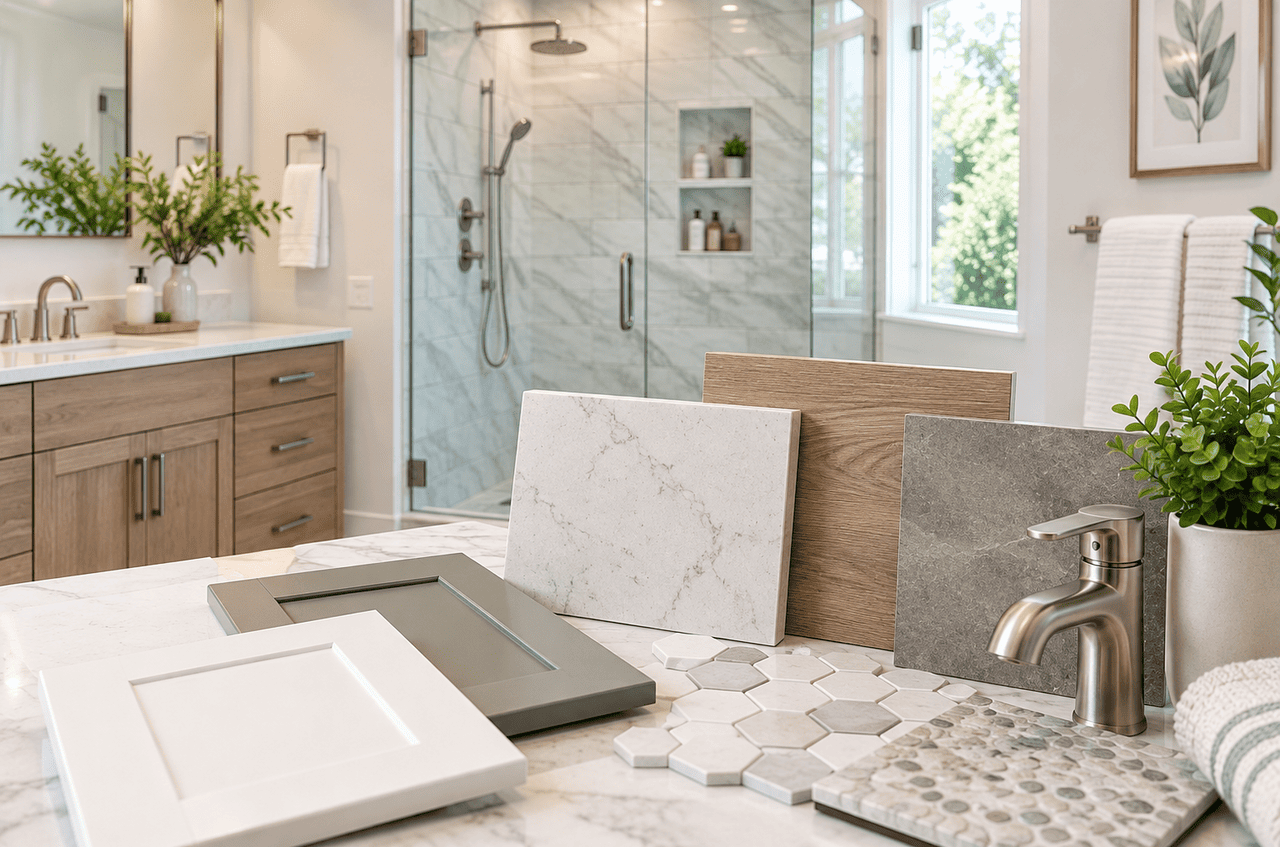
Bathroom remodeling is about more than choosing colors and finishes that look good. The materials you select also need to handle the conditions they will face every day.
That is particularly important in South Georgia.
Bathrooms naturally experience high levels of moisture from showers, baths, and sinks. Combine that with South Georgia's warm, humid climate, and selecting durable, moisture-resistant bathroom materials becomes an important part of creating a bathroom that is attractive, practical, and easier to maintain.
The best bathroom materials should resist moisture, tolerate frequent cleaning, maintain their appearance, and work with the way your household actually uses the space.
From shower walls and flooring to vanities and countertops, here's what South Georgia homeowners should consider when choosing materials for a bathroom remodel.
Why Bathroom Materials Matter in South Georgia
Bathrooms are among the most moisture-intensive rooms in a home.
Every hot shower releases water vapor into the room. Water can splash onto walls and floors, while damp towels and wet surfaces can increase the amount of moisture that needs to dry.
In a humid region like South Georgia, bathrooms may also have less opportunity to dry quickly if ventilation and air circulation are inadequate.
Over time, poorly selected materials or improperly managed moisture can contribute to problems such as:
- Peeling finishes
- Swelling or warping
- Staining
- Deteriorated grout or caulk
- Musty odors
- Mold or mildew growth
- Difficult-to-clean surfaces
- Premature material replacement
This doesn't mean every South Georgia bathroom will experience these issues. Proper installation, ventilation, waterproofing, maintenance, and material selection all play important roles.
When planning a bathroom remodel, consider the entire system rather than selecting products based only on appearance.
What Makes a Good Bathroom Material?
Before comparing individual products, it helps to understand what you're looking for.
The best materials for a bathroom generally provide a combination of:
Moisture Resistance
Materials in wet and humid areas should tolerate regular exposure to moisture without easily swelling, deteriorating, or losing their finish.
Durability
A bathroom is used every day. Floors, shower walls, countertops, and fixtures should be able to withstand regular use.
Easy Maintenance
A beautiful bathroom becomes less enjoyable when it requires constant scrubbing.
Smooth, nonporous or low-maintenance surfaces can simplify cleaning and help the bathroom maintain its appearance.
Safety
Flooring and shower surfaces should be selected with wet conditions in mind. Extremely slick materials may look attractive but can be less practical in a bathroom.
Long-Term Appearance
Trendy materials can be appealing, but homeowners should also consider how a product is likely to look several years from now.
A balanced design can provide a modern appearance without requiring another renovation when trends change.
Best Materials for Shower Walls
The shower is one of the most important areas to consider when choosing bathroom materials.
Shower walls are exposed directly to water, soap, cleaning products, and repeated temperature changes. This makes moisture resistance and ease of maintenance especially important.
There are several options.
Engineered Shower Wall Systems
Modern shower wall systems can be an excellent option for homeowners who want an attractive surface with fewer grout lines.
Depending on the product, these systems may replicate the appearance of:
- Marble
- Natural stone
- Tile
- Contemporary solid surfaces
One of their major advantages is maintenance.
Traditional tiled showers contain numerous grout lines. A wall system with large panels can substantially reduce the number of joints and seams that require cleaning.
For homeowners prioritizing a low-maintenance bathroom, this can be a major benefit.
The exact performance varies by manufacturer and product, so homeowners should compare material specifications, installation requirements, warranties, and cleaning recommendations before choosing.
Porcelain and Ceramic Tile
Tile remains a popular bathroom material because it provides tremendous design flexibility.
Homeowners can choose from many:
- Sizes
- Patterns
- Textures
- Colors
- Finishes
Porcelain tile is generally dense and well suited to moisture-prone environments when the overall installation is properly designed.
However, the tile itself isn't the only consideration.
The shower system behind the finished surface, installation quality, grout, joints, sealants where applicable, and ongoing maintenance all affect long-term performance.
Tile can create an attractive custom shower, but homeowners should be comfortable with the cleaning and maintenance requirements associated with grout lines.
Grout vs. Grout-Free Shower Walls
This is an important comparison for South Georgia homeowners.
Traditional tile installations create a distinctive look, but grout lines require attention. Soap residue, moisture, and everyday bathroom use can make grout more difficult to maintain than large smooth wall panels.
A grout-free or reduced-grout shower wall system can make routine cleaning easier.
That doesn't mean tile is automatically a poor choice.
Instead, think about your priorities.
If customization and intricate patterns are most important, tile may be attractive. If reducing cleaning and maintenance is a priority, a large-panel shower wall system may make more sense.
For many homeowners, the best bathroom isn't simply the one that photographs well immediately after installation. It is the one they can realistically maintain.
Best Bathroom Flooring for Humid Conditions
Bathroom flooring must handle a different set of challenges.
It needs to tolerate moisture while also providing a practical walking surface.
Popular choices can include porcelain or ceramic tile and certain waterproof flooring products specifically designed for wet or moisture-prone environments.
Porcelain Tile
Porcelain tile is commonly used for bathroom floors because of its durability and suitability for moisture-prone spaces.
It also provides numerous design choices, including products designed to resemble natural stone or wood.
However, surface texture matters.
Highly polished flooring can become slippery when wet, so homeowners should consider products intended for appropriate bathroom applications.
Waterproof Flooring Products
Some modern flooring systems are marketed specifically for moisture resistance or waterproof performance.
Not every product is appropriate for every bathroom application, though.
Review the manufacturer's specifications carefully, particularly if the material will be installed near a shower or bathtub.
The word "waterproof" should not replace proper installation or moisture management.
Bathroom Flooring Materials to Approach Carefully
Natural hardwood can create a beautiful appearance, but bathrooms present a challenging environment because of water and humidity.
If you love the look of wood, consider bathroom-appropriate products that reproduce the appearance without having the same sensitivity to moisture.
Likewise, carpet generally isn't a practical choice for areas exposed to bathroom moisture.
The goal is to select flooring based on actual bathroom conditions, not simply what looks appealing in a showroom.
Best Bathroom Countertop Materials
Bathroom countertops experience water, cosmetics, soap, cleaning products, and daily use.
A good countertop should therefore combine durability with relatively easy maintenance.
Quartz
Engineered quartz is popular because it offers a wide variety of appearances and a generally low-maintenance surface.
It can provide the appearance of stone while fitting contemporary and traditional bathroom designs.
Always follow the manufacturer's cleaning and care instructions.
Solid-Surface Materials
Solid-surface countertops can also provide a clean, streamlined appearance.
Their relatively seamless look can work especially well in modern bathrooms where easy cleaning is a priority.
Natural Stone
Natural stone can provide distinctive character, but maintenance requirements vary according to the material.
Some stone products may require more care than engineered alternatives.
Before choosing natural stone solely for appearance, understand its sealing, cleaning, and maintenance requirements.
Choosing Bathroom Vanity and Cabinet Materials
Cabinetry deserves special attention in humid bathrooms.
Materials that absorb moisture easily can swell, warp, or deteriorate when repeatedly exposed to damp conditions.
When selecting a bathroom vanity, look for products designed for bathroom environments rather than assuming any cabinet will perform equally well.
The quality of the finish, construction, edges, hardware, and installation all matter.
Homeowners should also prevent standing water from remaining around the vanity.
Even moisture-resistant materials perform better when spills and splashes are cleaned promptly.
Is MDF Good for Bathroom Vanities?
Medium-density fiberboard, or MDF, is used in many cabinetry products.
Its suitability depends significantly on product quality, finish, construction, and exposure.
Properly manufactured and sealed products designed for bathroom use may perform differently from unfinished or poorly protected fiberboard exposed repeatedly to water.
Rather than judging a vanity solely by the underlying material name, evaluate the complete product and its intended application.
For South Georgia bathrooms, moisture protection should be an important consideration.
Best Materials for a Walk-In Shower
When planning a walk-in shower, homeowners should consider all components together.
A successful shower includes more than attractive wall panels.
Think about:
- Shower walls
- Shower base
- Entry threshold
- Glass enclosure
- Fixtures
- Storage
- Seating
- Grab bars
- Waterproofing
- Drainage
For homeowners interested in aging in place, material selection should also account for accessibility and safety.
A low-threshold entry, properly positioned grab bars, convenient storage, and an appropriate shower surface can make the space more comfortable to use.
These features can be incorporated without making the bathroom feel institutional.
A modern accessible shower can still look clean, contemporary, and inviting.
What About Shower Glass?
Glass shower enclosures can make bathrooms feel larger and more open because they allow sightlines and light to continue through the room.
This is particularly useful in smaller bathrooms.
However, homeowners should consider cleaning requirements.
Hard-water spots, soap residue, and fingerprints can become visible on glass. Regular cleaning can help maintain its appearance.
The enclosure design should also be compatible with the shower configuration and available bathroom space.
Fixtures and Hardware for Humid Bathrooms
Bathroom fixtures are available in finishes ranging from chrome and brushed nickel to matte black and warmer metallic tones.
Appearance matters, but so do durability and maintenance.
Before choosing a finish, consider:
- Manufacturer care instructions
- Water spotting
- Cleaning requirements
- Resistance to everyday bathroom use
- Availability of matching accessories
One practical design approach is to select a consistent primary finish for the major fixtures and use other finishes sparingly.
This can help create a cohesive bathroom without making the design overly complicated.
Don't Forget What Is Behind the Finished Materials
Some of the most important components of a bathroom remodel aren't visible after the project is completed.
Beautiful shower walls cannot compensate for poor preparation behind them.
Depending on the remodeling system, proper substrate preparation, waterproofing, plumbing, sealing, drainage, and installation methods may all affect performance.
This is one reason professional installation matters.
Homeowners understandably spend considerable time choosing visible colors and patterns, but the quality of the installation behind those finishes can be just as important.
Bathroom Ventilation Matters as Much as Materials
Even excellent bathroom materials benefit from proper moisture management.
A bathroom exhaust fan can help remove humid air generated by showers and baths.
Homeowners should use bathroom ventilation appropriately and address any existing moisture problems during a remodel rather than simply covering them with new finishes.
Good habits can also help:
- Run appropriate ventilation during showers
- Continue ventilation as needed afterward
- Dry significant standing water
- Keep shower surfaces reasonably clean
- Repair leaks promptly
- Follow manufacturer maintenance instructions
Material selection and ventilation work together.
Installing moisture-resistant products doesn't mean bathroom humidity can be ignored.
Low-Maintenance Bathroom Materials
For many homeowners, easier cleaning is one of the most valuable outcomes of remodeling.
If low maintenance is your priority, consider minimizing features that create unnecessary cleaning challenges.
That might mean choosing:
- Large shower wall panels
- Fewer grout lines
- Easy-to-clean countertops
- Simple fixture designs
- Built-in shower storage
- Moisture-resistant cabinetry
- Durable bathroom flooring
Reducing maintenance doesn't require creating a plain bathroom.
Modern products are available in numerous colors, textures, and patterns, allowing homeowners to combine practicality with style.
Materials for Small Bathrooms
Material selection can also influence how large or small a bathroom feels.
In compact spaces, lighter surfaces can help reflect available light. Larger visual patterns and consistent materials can reduce the feeling of clutter.
Glass shower doors may make the shower feel connected to the rest of the bathroom instead of visually dividing the room.
Homeowners planning a small bathroom remodel should therefore think about both physical space and visual space.
Built-in shower storage can also reduce the need for freestanding organizers that take up valuable room.
Best Materials for Tub-to-Shower Conversions
A tub-to-shower conversion is an opportunity to replace an older bathing area with materials designed around your current needs.
Because many conversions use the existing bathtub footprint, homeowners can focus their budget on the new shower system rather than automatically redesigning the entire bathroom.
Material priorities often include:
- Moisture-resistant shower walls
- Durable shower base
- Easy-clean surfaces
- Convenient shelving
- Appropriate fixtures
- Glass or another suitable enclosure
- Accessibility features
For homeowners who rarely use their bathtub, the result can be a bathing area that is easier to enter and more practical for everyday use.
What Bathroom Materials Should You Avoid?
There isn't a universal list of materials that must never be used in a bathroom.
Instead, be cautious with products that:
- Aren't designed for moisture-prone environments
- Absorb water easily
- Require more maintenance than you're willing to perform
- Become excessively slippery when wet
- Have unclear installation requirements
- Aren't appropriate for the intended application
A material that works perfectly in a bedroom or living area isn't automatically appropriate for a shower or bathroom floor.
Always consider the manufacturer's intended use.
Should You Choose Materials Based on Price?
Price matters, but it shouldn't be the only factor.
A less expensive material that requires frequent maintenance or premature replacement may not provide the best long-term value.
When comparing bathroom materials, evaluate:
Initial cost + durability + maintenance + installation + expected lifespan.
This provides a more complete picture than simply comparing purchase prices.
If you're financing your project, material choices can also influence how much you ultimately need to finance. Homeowners considering payment options can review our guide to bathroom remodel financing for additional planning information.
Bathroom Materials for Savannah and Coastal South Georgia
Homes in Savannah and nearby areas deserve particular attention to moisture management because warm, humid conditions are a normal part of the regional climate.
That doesn't mean homeowners need to sacrifice design.
Modern shower walls, bathroom flooring, countertops, cabinetry, and fixtures provide many ways to combine attractive finishes with practical performance.
For a bathroom remodel in Savannah, focus on materials that are suitable for bathroom applications, proper installation, ventilation, and realistic maintenance.
These principles apply throughout South Georgia, including homes in Pooler, Albany, Tifton, Jesup, Fitzgerald, and Douglas.
Choosing Materials for a Bathroom Remodel in Pooler, GA
If you're planning a bathroom remodel in Pooler, GA, begin by considering how your existing bathroom performs rather than immediately choosing colors.
Ask:
- Which surfaces are hardest to clean?
- Are there signs of moisture problems?
- Is the bathtub still useful?
- Would a walk-in shower improve the space?
- Is the flooring appropriate for a wet environment?
- Do you need better shower storage?
- Is accessibility becoming important?
- How much maintenance are you willing to perform?
These questions can help narrow the material choices considerably.
A homeowner who prioritizes minimal maintenance may make different selections from someone primarily interested in intricate custom design.
How to Choose the Right Bathroom Materials
With so many products available, material selection can become overwhelming.
A simple approach is to rank your priorities.
Start with these five:
- Moisture resistance. Is the product appropriate for where it will be installed?
- Maintenance. How much cleaning and upkeep does it require?
- Durability. Is it designed for frequent bathroom use?
- Safety. Is it appropriate for wet conditions and your household's needs?
- Style. Does it create the appearance you want?
A material that performs well across all five categories is usually more valuable than one chosen for appearance alone.
Work With Five Star Bath Solutions of South Georgia
Choosing bathroom materials is easier when you can evaluate them as part of a complete remodeling plan.
Five Star Bath Solutions of South Georgia helps homeowners explore bathroom remodeling solutions based on their existing space, design preferences, maintenance goals, accessibility needs, and budget.
Services include bathroom remodeling, walk-in showers, tub-to-shower conversions, and walk-in tubs.
For South Georgia homeowners, the goal is to create a bathroom that doesn't just look impressive when the project is completed. It should remain practical for everyday life.
Five Star Bath Solutions of South Georgia serves homeowners in Savannah, Pooler, Albany, Tifton, Jesup, Fitzgerald, and Douglas.
To discuss your bathroom remodeling project, call (912) 557-9730.
Frequently Asked Questions About Bathroom Materials
What is the best material for bathroom shower walls?
There isn't one best option for every homeowner. Porcelain or ceramic tile and modern shower wall systems can both be suitable choices. Consider moisture resistance, maintenance, appearance, installation, and how much grout cleaning you're comfortable with.
What bathroom material is easiest to clean?
Smooth, nonporous or low-maintenance surfaces with fewer joints and grout lines are generally easier to maintain. Large shower wall panels are often attractive to homeowners who want to reduce routine shower cleaning.
What is the best flooring for a humid bathroom?
Bathroom-appropriate porcelain or ceramic tile and certain flooring products specifically designed for wet or moisture-prone environments are common choices. Consider moisture performance and slip resistance as well as appearance.
Is tile good for South Georgia bathrooms?
Tile can be an excellent bathroom material when the complete installation is appropriate for the application. Homeowners should consider grout maintenance and the quality of the underlying installation in addition to the tile itself.
Are grout-free shower walls better?
They can be better for homeowners prioritizing easy maintenance because fewer grout lines can mean fewer areas requiring routine grout cleaning. Design preferences and product quality should also factor into the decision.
What countertop material works well in bathrooms?
Quartz and solid-surface products are popular low-maintenance options. Natural stone can also be used, but maintenance requirements vary by material.
How can I protect my bathroom from humidity?
Start with bathroom-appropriate materials, proper installation, effective ventilation, prompt leak repairs, and regular maintenance. No finished material should be treated as a substitute for good moisture management.
Conclusion
Choosing the best bathroom materials is one of the most important parts of planning a remodel, especially in South Georgia's warm and humid environment.
Homeowners should look beyond appearance and consider how each material will perform when exposed to daily moisture, cleaning, and regular use.
For shower walls, reduced-grout or large-panel systems can provide an attractive, lower-maintenance alternative to traditional tile. Bathroom flooring should be moisture appropriate and practical when wet. Countertops and vanities should combine durability with easy maintenance, while fixtures should be selected with both appearance and long-term care in mind.
Just as importantly, don't overlook what happens behind the finished surfaces. Proper installation, moisture management, drainage, and ventilation contribute to the long-term performance of the bathroom.
Whether you're planning a complete renovation, installing a walk-in shower, or completing a tub-to-shower conversion, choose materials according to moisture resistance, durability, maintenance, safety, and style.
For homeowners in Savannah, Pooler, Albany, Tifton, Jesup, Fitzgerald, and Douglas, Five Star Bath Solutions of South Georgia can help you explore bathroom remodeling options designed around your home and priorities.
.png)




.png)


