October 20, 2026
Bathroom Color Ideas: 25 Beautiful Color Schemes for Every Style

Choosing bathroom colors can seem simple until you're standing in front of dozens of paint samples, shower-wall finishes, cabinet colors, flooring options, and fixture styles.
The right color palette can make a bathroom feel brighter, calmer, larger, warmer, or more luxurious. The wrong combination can make even a newly remodeled bathroom feel dark, dated, or visually disconnected.
That's why the best bathroom color ideas aren't based only on what's trending. A successful bathroom color scheme should work with the room's size, lighting, permanent materials, fixtures, cabinetry, and the atmosphere you want to create.
Small bathrooms may benefit from colors that create a more open feeling, while larger bathrooms provide more freedom to experiment with deeper shades and stronger contrasts. Shower walls and flooring also matter because they occupy far more visual space than many homeowners realize.
Whether you're planning a complete bathroom remodel, replacing an outdated shower, updating your vanity, or simply searching for bathroom paint color ideas, the following combinations can help you build a bathroom that feels coordinated from floor to ceiling.
Here are 25 bathroom color ideas, followed by practical advice for choosing paint colors, cabinet finishes, wall colors, small-bathroom palettes, and color combinations.
25 Bathroom Color Ideas for a Beautiful Remodel
1. Warm White + Natural Wood
Warm white and natural wood is one of the most versatile bathroom color combinations.
Rather than using a stark, cool white throughout the room, choose a white with subtle warm undertones and pair it with oak, walnut, or another natural-looking wood finish.
This combination works particularly well with:
- White or marble-inspired shower walls
- Warm wood vanities
- Neutral flooring
- Brushed nickel, chrome, brass, or matte-black fixtures
- Clear shower glass
- Soft beige accessories
Natural wood prevents a predominantly white bathroom from feeling sterile, while the light walls help maintain a clean, bright appearance.
It's an especially useful palette when you want a timeless bathroom rather than one dominated by a short-lived color trend.
2. Sage Green + White
Sage green has become a popular choice for homeowners who want color without making the bathroom overly bold.
Its muted character works beautifully with white shower walls, white countertops, and light flooring.
You can use sage green on:
- Painted walls
- Vanity cabinetry
- An accent wall
- Decorative elements
Pair it with natural wood for an organic look or matte-black hardware for stronger contrast.
Sage is also an excellent example of how colorful bathroom ideas don't have to mean bright or saturated colors. A muted green can give the room personality while maintaining a calm atmosphere.
3. Navy Blue + Crisp White
Navy and white create a classic high-contrast bathroom.
White keeps the room bright, while navy provides depth and visual weight.
One effective approach is to use white across the shower and major wall surfaces while introducing navy through the vanity.
You can also reverse the emphasis in a larger bathroom by using a navy wall with lighter cabinetry and shower surfaces.
Brass hardware can warm the combination, while chrome or brushed nickel creates a cooler, more traditional finish.
For smaller bathrooms, use navy selectively rather than covering every wall.
4. Light Gray + Warm Wood
Light gray is a flexible neutral that can work with modern, transitional, and traditional bathrooms.
The key is avoiding a room composed entirely of cold gray surfaces.
Adding warm wood through the vanity, shelving, or cabinetry helps balance the palette.
Consider combining:
- Light-gray walls
- Warm wood vanity
- White shower walls
- White countertop
- Black or brushed-nickel fixtures
The resulting color scheme feels neutral without being flat.
5. Beige + Cream
Beige and cream are excellent choices for homeowners who prefer warm neutrals.
This palette can make a bathroom feel comfortable and inviting while remaining flexible enough to work with many materials.
Try cream walls with a slightly darker beige vanity, or use warm beige walls with off-white shower surfaces.
Natural stone-inspired patterns can add visual interest without disrupting the calm palette.
Warm neutrals are also easy to update because towels, artwork, plants, and accessories can introduce new colors later.
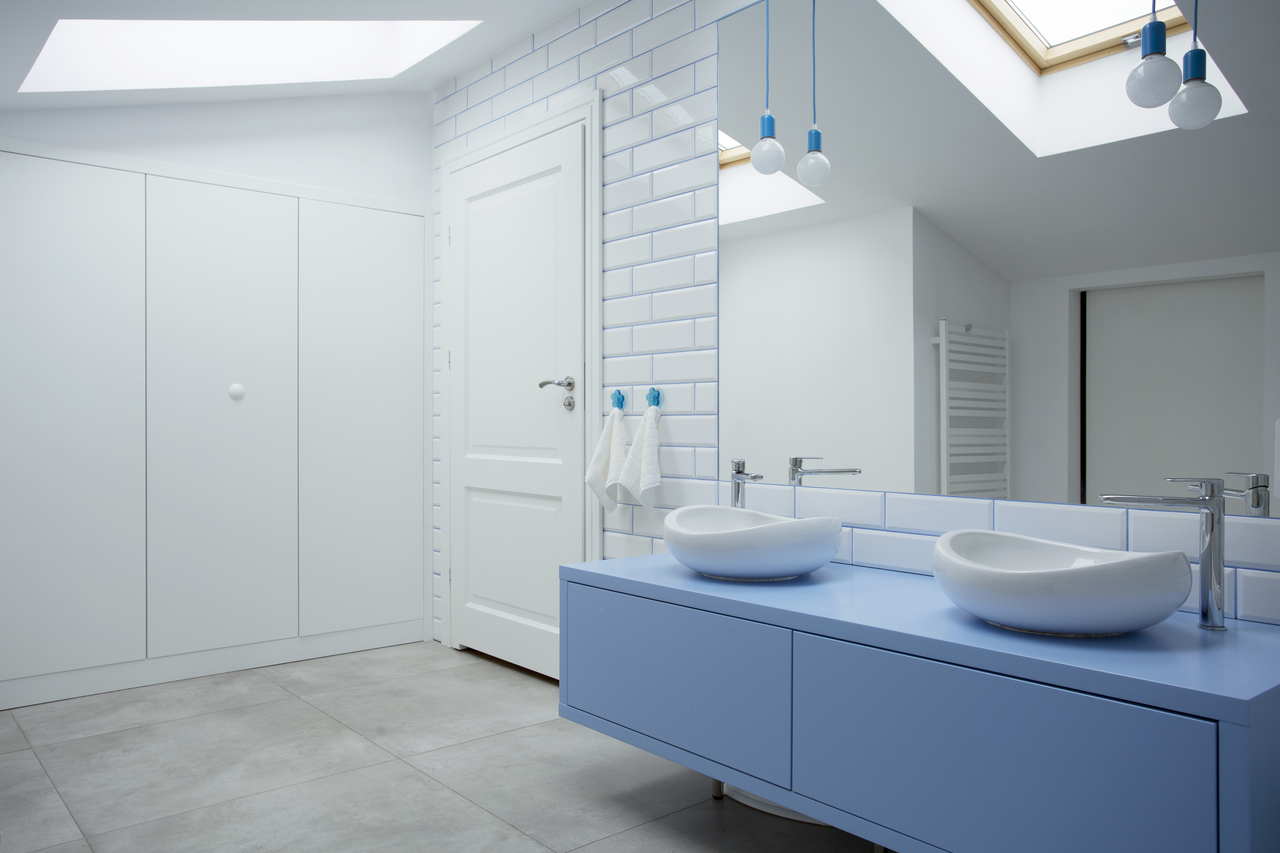
6. Dusty Blue + White
Dusty blue gives a bathroom color without the intensity of a bright blue.
It's particularly effective when paired with:
- White shower walls
- White cabinetry
- Light-gray flooring
- Natural wood accents
- Brushed-metal fixtures
The combination can feel fresh and relaxing without relying too heavily on a themed coastal look.
If you're considering blue bathroom wall color ideas, a muted blue is generally easier to coordinate than a highly saturated shade.
7. Charcoal + White
Charcoal creates dramatic contrast.
In a bathroom with plenty of light, charcoal cabinetry or an accent wall can create a sophisticated focal point against white shower walls and countertops.
Because charcoal is visually heavy, balance matters.
Rather than making every major surface dark, consider using charcoal for the vanity and keeping the shower, ceiling, and surrounding walls lighter.
Warm wood or metallic accents can soften the contrast.
8. Black + Warm Wood
Black and wood can create a modern bathroom with substantial visual character.
The safest approach is often to use black strategically.
Consider:
- Matte-black fixtures
- Black-framed shower glass
- Black vanity hardware
- Warm wood cabinetry
- White or cream shower walls
The wood prevents black accents from making the room feel harsh.
In a smaller bathroom, black works especially well as an accent rather than the dominant wall color.
9. Soft Green + Beige
Green and beige create an earthy palette inspired by natural colors.
Use a soft green on the walls and pair it with warm beige flooring, a wood vanity, and cream shower surfaces.
This combination works particularly well when the bathroom receives natural light.
Plants and subtle organic textures can reinforce the palette without turning the room into a themed space.
10. Terracotta + Cream
For homeowners who want warmer bathroom colors ideas, terracotta provides much more personality than standard beige.
Because terracotta is a stronger color, you don't need to use it everywhere.
A terracotta accent wall, vanity color, or decorative feature can work beautifully with:
- Cream walls
- Warm white shower surfaces
- Natural wood
- Beige flooring
- Brass-toned accents
This palette feels warm and distinctive without requiring every surface to be colorful.
11. Pale Blue + Gray
Pale blue and soft gray can create a cool, peaceful bathroom.
Use blue for the walls and gray for flooring or cabinetry, then introduce white to prevent the room from becoming too cool.
This palette works particularly well with brushed nickel and chrome fixtures.
If the bathroom receives limited natural light, choose lighter versions of both colors.
12. Greige + White
Greige combines characteristics of gray and beige, making it useful for homeowners who can't decide between cool and warm neutrals.
Pair greige walls with:
- White shower walls
- White countertops
- Wood or greige cabinetry
- Neutral flooring
- Black, chrome, or brushed-metal fixtures
Because greige is understated, it also provides an excellent background for more decorative shower patterns.
13. Deep Green + Brass
Deep green paired with brass can create a rich, dramatic bathroom.
It works particularly well on vanity cabinetry.
Keep the shower and surrounding surfaces lighter so the green remains a deliberate focal point.
For example:
Deep green vanity + warm white walls + light stone-inspired shower + brass-toned hardware.
This is a strong option for homeowners searching for more luxurious or colorful bathroom ideas.
14. Taupe + Ivory
Taupe and ivory provide a softer alternative to gray and white.
The combination works particularly well in bathrooms where you want warmth without obvious yellow or brown tones.
Taupe cabinetry, ivory shower walls, and a warm white wall color can create subtle depth while remaining highly neutral.
15. Black + White
Few bathroom color combinations are as recognizable as black and white.
The challenge is using the contrast intentionally.
A predominantly white bathroom with black fixtures, hardware, or shower framing generally feels lighter than a room with large black surfaces.
For a stronger statement, black cabinetry can become the visual anchor.
Because this combination is already dramatic, keep patterns under control unless you're intentionally creating a bold design.
16. Coastal Blue + Sand
Blue and sandy beige can produce a relaxed palette that works particularly well in warm climates.
Avoid turning every decorative choice into a literal beach reference. Instead, use the colors as inspiration.
For example:
- Muted blue walls
- Sand-colored flooring
- Warm white shower walls
- Natural wood vanity
- Light countertop
This produces a relaxed look without relying on themed decor.
17. Blush + Warm White
Soft blush can work surprisingly well in a bathroom when paired with warm white.
Choose a muted blush rather than an intensely saturated pink for a more versatile result.
Use the color on one wall or across the main painted surfaces, then keep shower materials and cabinetry relatively neutral.
Warm metals and natural wood can complement the palette.
18. Moody Blue + Gray
A deep blue-gray can give a larger bathroom an intimate, sophisticated feel.
It works especially well when there is sufficient natural or artificial lighting.
Try deep blue walls with:
- Light-gray flooring
- White shower walls
- Wood or white cabinetry
- Metallic fixtures
In a compact bathroom, reserve the darkest blue for a vanity or focal wall.
19. Olive Green + Natural Wood
Olive green works beautifully with wood because both have an organic character.
A wood vanity against olive walls can create warmth without depending on traditional beige.
Cream, off-white, or subtle stone-inspired shower walls can keep the room balanced.
This combination is particularly useful if you want an earthy bathroom that still feels contemporary.
20. White + Matte Black
White and matte black create a crisp modern palette.
The white surfaces do most of the visual work, while black introduces definition through:
- Faucets
- Shower fixtures
- Cabinet hardware
- Shower framing
- Mirrors
- Lighting
This is an effective approach for small bathrooms because you can create strong visual contrast without darkening large areas of the room.
21. Cream + Brown
Brown is returning to interiors through warmer woods, stone-inspired finishes, and earthy palettes.
Instead of pairing dark brown with equally dark walls, use cream to maintain balance.
A medium- or dark-wood vanity can look particularly effective against cream walls and a light shower.
This is an excellent option for homeowners who find gray bathrooms too cool.
22. Light Blue + Natural Stone
Light blue can pair beautifully with natural stone or stone-inspired surfaces.
The blue brings subtle color, while beige, cream, or gray stone patterns introduce texture.
Keep cabinetry relatively simple so the room doesn't have too many competing visual elements.
23. Emerald Green + White
Emerald green creates a much bolder statement than sage or olive.
Because of its intensity, use it selectively.
An emerald vanity against white walls can become the focal point without overwhelming the bathroom.
You can also use the color on a single accent wall in a larger space.
24. Warm Gray + Beige
Gray and beige don't have to compete.
A warm gray can work with beige flooring or stone-inspired shower walls when their undertones are compatible.
This is a useful strategy for remodeling a bathroom when one existing finish will remain.
Instead of trying to ignore the existing beige or gray material, create a palette that intentionally connects it to the new finishes.
25. Neutral Bathroom + Colorful Accent
You don't need to commit to colorful permanent materials to create a colorful bathroom.
Start with neutral permanent elements such as:
- White or cream shower walls
- Neutral flooring
- Natural wood vanity
- Simple countertop
Then introduce stronger colors through wall paint, towels, artwork, accessories, or cabinetry.
This strategy gives you flexibility.
If you eventually become tired of blue, green, terracotta, or another accent color, changing paint and accessories is much easier than replacing an entire shower.
Best Small Bathroom Color Ideas
Choosing colors for a small bathroom requires a slightly different strategy.
There is no rule saying a small bathroom must be white. Dark and colorful bathrooms can be beautiful.
However, color placement becomes particularly important when square footage is limited.
Use Light Colors to Create Visual Continuity
Light colors reflect more available light and generally create less visual separation between surfaces.
Popular small bathroom color ideas include:
- Warm white
- Cream
- Pale gray
- Light greige
- Soft sage
- Pale blue
- Light beige
Using similar tones across several large surfaces can create continuity.
For example, warm white walls, cream shower walls, and light beige flooring create fewer dramatic visual breaks.
Don't Be Afraid of Dark Colors
Dark colors can still work in small bathrooms.
The key is deciding where they belong.
Instead of painting every wall navy, try:
- Navy vanity + white walls
- Charcoal accent wall + light shower
- Black fixtures + warm white surfaces
- Deep green cabinet + cream walls
This creates contrast without allowing the darkest shade to dominate the entire room.
Use Clear Shower Glass
Color isn't limited to paint.
An opaque shower curtain or heavily framed enclosure can visually divide a small bathroom.
Clear glass allows your eye to continue into the shower, helping the room feel more connected.
If the shower walls are attractive, glass also allows them to contribute to the overall bathroom color palette.
Coordinate the Shower and Main Wall Colors
One of the most effective color ideas for small bathrooms is reducing unnecessary contrast between major surfaces.
If the shower is bright white and the walls are extremely dark, the boundaries of each area become more obvious.
That isn't inherently bad, but if your objective is to create a more open feeling, consider closer tonal relationships.
A light greige wall next to warm white shower walls, for example, can create a smoother visual transition.
Keep the Ceiling Light
A light ceiling is usually the safest choice in a compact bathroom because it helps maintain visual height.
That doesn't mean it must be pure white.
A soft off-white coordinated with the wall undertone can produce a more polished result.
Add Color Through the Vanity
For homeowners searching for bathroom color ideas for small bathrooms but worried about overwhelming the space, the vanity is an excellent place to experiment.
Try:
- Sage green
- Navy
- Medium blue
- Charcoal
- Natural wood
- Olive
- Deep green
Then keep the surrounding walls and shower surfaces lighter.
This creates a focal point without requiring a bold wall color throughout the room.
Bathroom Paint Color Ideas
Paint is one of the easiest ways to change the overall character of a bathroom.
But choosing a bathroom paint color requires more than finding a swatch you like.
The same paint can appear dramatically different depending on lighting, flooring, shower materials, and cabinetry.
Warm White Bathroom Paint Colors
Warm white works well with:
- Wood cabinetry
- Beige flooring
- Cream shower walls
- Warm stone patterns
- Brass-toned accents
It provides brightness without the stark appearance some pure whites can create.
Cool White Bathroom Paint Colors
Cool whites work better when the bathroom already contains cooler materials such as:
- Blue-gray tile
- Cool marble patterns
- Crisp white cabinetry
- Chrome
- Cool gray flooring
Mixing an icy white with very warm beige materials can sometimes make the undertones of both surfaces more obvious.
Green Bathroom Paint Colors
Green is one of the most flexible bathroom paint families.
Sage creates softness. Olive provides warmth. Deep green adds drama.
The surrounding finishes determine how strong the green should be.
If you already have patterned shower walls or flooring, a muted green may be easier to coordinate.
Blue Bathroom Paint Colors
Blue remains a natural choice for bathrooms because it can create a calm atmosphere.
Options range from barely-there blue to navy.
Lighter blues work well when you want subtle color. Dark blues are more effective as statement shades.
Beige and Greige Bathroom Paint
For homeowners who prefer neutrals, beige and greige offer more warmth than traditional cool gray.
They pair well with many wood tones and stone-inspired finishes.
When comparing bathroom paint color ideas, always evaluate the paint next to the actual permanent materials rather than looking at the swatch by itself.
Bathroom Wall Color Ideas
Bathroom walls occupy a large amount of visual space, which means the wall color has a major effect on the finished room.
Before choosing a color, identify the fixed surfaces that won't be changing.
These might include:
- Shower walls
- Flooring
- Countertops
- Vanity
- Bathtub
- Existing tile
Your bathroom wall color ideas should complement these materials rather than compete with them.
Match Undertones, Not Exact Colors
Your walls don't need to exactly match your shower.
In fact, an exact match can make the room feel flat.
Instead, look at undertones.
If your shower has warm beige veining, a warm white or greige wall may coordinate better than a blue-gray.
If your shower walls contain cooler gray patterns, a soft gray, cool white, or muted blue may work well.
Use an Accent Wall Carefully
An accent wall can introduce personality, but bathrooms often contain many visual elements already.
If you have a patterned floor, dramatic shower walls, bold vanity, and statement mirror, adding another highly saturated wall may be too much.
Choose which feature you want people to notice first.
Bathroom Cabinet Color Ideas
Cabinetry is one of the best places to introduce color because it provides a defined visual area.
Popular bathroom cabinet color ideas include:
White
Clean and flexible, particularly useful when other surfaces contain stronger colors or patterns.
Natural Wood
Adds warmth and texture while working with many neutral palettes.
Navy
Provides strong contrast against white or light walls.
Sage Green
Introduces subtle color without dominating the room.
Deep Green
Creates a dramatic focal point, particularly against warm white.
Black
Works well in modern bathrooms but should be balanced with lighter surrounding surfaces.
Greige
Offers a subtle alternative to white while remaining highly adaptable.
Charcoal
Provides depth without the intensity of pure black.
When choosing a cabinet color, look at it next to the countertop and flooring. These surfaces physically meet the vanity and therefore need to coordinate particularly well.
Bathroom Color Palette Ideas
A good bathroom palette usually includes more than one color.
Instead of selecting every finish independently, build a simple hierarchy.
Start With the Most Permanent Surface
If you're remodeling the shower, begin with the shower-wall or flooring material.
If the shower is staying, start with its existing color.
This creates a foundation for the rest of the bathroom color palette ideas you're considering.
Choose a Main Neutral
Your main neutral may be:
- White
- Cream
- Beige
- Greige
- Gray
- Taupe
This color can appear across large surfaces and connect different parts of the bathroom.
Add a Secondary Color
Your secondary color could be:
- Wood
- Sage
- Navy
- Blue
- Green
- Charcoal
This often works well on the vanity or walls.
Add an Accent
Finally, introduce a smaller accent through hardware, fixtures, accessories, or decor.
A palette might look like:
Warm white + oak + matte black
or:
Cream + sage + brass
or:
White + navy + chrome
The important part is creating relationships between the colors rather than treating every choice as an independent decision.
Bathroom Color Scheme Ideas
A bathroom color scheme should account for every major visible surface.
That includes:
- Walls
- Shower
- Vanity
- Countertop
- Flooring
- Fixtures
- Hardware
- Ceiling
- Towels and accessories
One of the easiest ways to create a cohesive scheme is to repeat colors.
For example, if you choose matte-black shower fixtures, repeating black on the cabinet hardware or mirror frame can help the bathroom feel intentional.
If the shower has warm beige veining, repeating a similar warm tone in the flooring or vanity can connect the space.
Repetition doesn't mean everything should match.
It means colors should have a reason for being there.
Bathroom Color Combination Ideas
If you're struggling to create a palette, begin with two dominant colors and one smaller accent.
These combinations provide a starting point rather than a rigid formula.
Your actual bathroom materials and lighting should determine the final choices.
Colorful Bathroom Ideas Without Overdoing It
Colorful bathrooms don't have to contain five different saturated shades.
Often, one strong color surrounded by well-selected neutrals is more effective.
Use a Colorful Vanity
A blue, green, or even muted terracotta vanity can create a focal point while leaving the rest of the bathroom relatively neutral.
Paint One Wall
An accent wall can introduce color without committing the entire room to the same shade.
Choose a Muted Color
Sage, dusty blue, olive, and blush provide noticeable color without the visual intensity of brighter alternatives.
Add Replaceable Color
Towels, artwork, plants, and accessories are useful places to experiment.
This approach is particularly helpful if you're hesitant about committing to a colorful shower or permanent flooring.
Let the Shower Be the Feature
A shower with stone-inspired patterns can provide enough movement that the rest of the bathroom doesn't need strong color.
This is why color planning should happen before materials are selected.
How Shower Materials Affect Your Bathroom Color Scheme
The shower is often one of the largest visual surfaces in the bathroom.
Ignoring it while choosing paint is a mistake.
A walk-in shower may contain multiple visually important elements:
- Shower walls
- Shower base
- Fixtures
- Glass
- Hardware
- Storage niches
- Seating
Each contributes to the color scheme.
Light Shower Walls
White, cream, and light stone-inspired shower walls can create a brighter appearance and provide flexibility with surrounding colors.
They pair easily with wood, green, blue, gray, beige, and black.
Patterned Shower Walls
If the shower has noticeable veining or a stone-inspired pattern, pull one of its quieter tones into the rest of the bathroom.
For example, beige veining might connect naturally to warm wall paint or wood cabinetry.
Dark Fixtures
Matte-black fixtures create visual definition against light shower walls.
Repeating black elsewhere in the room can make the choice feel deliberate.
Glass and Color
Clear shower glass allows the shower-wall color to remain visible from the rest of the bathroom.
That means the shower becomes an important part of the overall color palette rather than a separate enclosed area.
If you're planning to update an outdated bathing area, explore our Walk-In Shower Ideas to Transform Your Bathroom for more inspiration on shower layouts, finishes, storage, and design.
Bathroom Colors for a Small Bathroom
When homeowners search for small bathroom paint color ideas, they're often trying to solve two problems:
How can I make the bathroom feel less cramped?
And how can I add personality without making it feel busy?
The solution doesn't have to be all-white.
Try Warm White + Wood
This is one of the easiest small-bathroom combinations.
The walls remain bright while the wood prevents the room from looking sterile.
Try Pale Sage + White
Soft green adds character while maintaining a relatively light palette.
Try Light Greige + Cream
This combination provides subtle depth without creating dramatic visual boundaries.
Try White + Navy Vanity
Keep the largest surfaces light and use the vanity as the focal point.
Try Light Blue + Warm White
This provides color while maintaining an airy appearance.
These are useful color ideas for a small bathroom because they create interest without requiring multiple competing surfaces.
For more ways to improve limited square footage, see our Small Bathroom Remodel: Cost, Ideas & Space-Saving Tips guide.
How Lighting Changes Bathroom Paint Colors
Never choose bathroom paint without considering lighting.
Color is heavily influenced by both natural and artificial light.
Natural Light
A bathroom with a large window may show colors very differently throughout the day.
A neutral that appears warm in morning light might appear flatter or cooler later.
Artificial Lighting
Bulb color temperature can affect how paint, shower materials, and cabinetry appear.
Warm lighting may emphasize beige, cream, wood, and other warm tones.
Cooler lighting can make blue, gray, and crisp white more prominent.
Test Before Committing
Whenever possible, evaluate samples in the actual bathroom.
Look at them:
- In the morning
- In the afternoon
- At night
- With bathroom lighting turned on
Also hold the samples next to the vanity, flooring, countertop, and shower.
A color that looks beautiful in isolation may not work next to the room's permanent materials.
Should the Bathroom Vanity Match the Walls?
Not necessarily.
Matching the vanity exactly to the walls can create a streamlined appearance, but contrast often produces a more interesting result.
For example:
Warm white walls + oak vanity
White walls + navy vanity
Cream walls + sage vanity
Greige walls + dark wood vanity
Soft gray walls + white vanity
If both the walls and vanity are bold colors, pay close attention to their undertones and visual intensity.
One should usually take the lead.
Should the Bathroom and Bedroom Colors Match?
If a bathroom connects directly to a bedroom, the colors don't need to be identical.
However, creating some relationship between the spaces can improve visual continuity.
You might repeat:
- A wood tone
- A neutral
- A metal finish
- An accent color
- A similar undertone
For example, a bedroom with warm beige walls can transition naturally into a bathroom with warm white walls, beige flooring, and a wood vanity.
The rooms feel related without being copies of one another.
Choosing Bathroom Colors for South Georgia Homes
Homeowners in South Georgia can use the same broad design principles as homeowners elsewhere, but the regional climate makes material selection particularly important.
A beautiful bathroom palette should still use surfaces and finishes appropriate for a moisture-prone environment.
When remodeling, think beyond wall paint.
Consider how the color scheme works with:
- Shower-wall materials
- Bathroom flooring
- Vanity surfaces
- Ventilation
- Wet-area finishes
- Fixtures
- Easy-to-maintain surfaces
In South Georgia's humid climate, selecting appropriate bathroom materials and maintaining effective ventilation are more important than choosing a trendy color.
Our guide to the Best Bathroom Materials for South Georgia's Humid Climate explores material considerations for showers, flooring, vanities, countertops, and other bathroom surfaces.
How to Choose the Right Bathroom Color
With so many color ideas for bathroom projects, narrowing the choices can be difficult.
A simple process helps.
1. Identify What Is Staying
Are you keeping the flooring?
The vanity?
The countertop?
The shower?
Any permanent material that remains should influence your new colors.
2. Choose the Largest New Surface
If you're replacing the shower, start there.
If you're installing new flooring throughout the bathroom, that may become the starting point instead.
3. Identify the Undertone
Determine whether the major materials lean warm, cool, or relatively neutral.
Then choose supporting colors accordingly.
4. Select the Vanity
The vanity occupies significant visual space and can serve either as a neutral anchor or a focal color.
5. Choose Wall Paint
Paint offers enormous flexibility, so it often makes sense to choose it after more permanent materials.
6. Select Fixtures and Hardware
Decide whether you want fixtures to blend into the palette or provide contrast.
7. Test Everything Together
Look at physical samples in the actual bathroom whenever possible.
Don't rely entirely on individual online images, because lighting and displays can alter how colors appear.
Bathroom Color Mistakes to Avoid
Even attractive colors can create a disappointing bathroom when they're combined poorly.
Choosing Paint First
Paint is relatively easy to change.
Shower walls, flooring, countertops, and cabinetry are much more expensive and disruptive to replace.
Choose permanent materials first whenever possible.
Ignoring Undertones
Two neutrals can clash even if both are technically beige, gray, or white.
A cool gray next to a yellow-beige surface may exaggerate the undertones of both.
Using Too Many Focal Points
A bold vanity, patterned floor, dramatic shower, colorful walls, and statement countertop can compete for attention.
Decide where you want the visual emphasis.
Following Trends Too Literally
Trends can provide inspiration, but permanent bathroom materials should also reflect your long-term preferences.
If you're unsure about a trendy color, use it in paint or accessories rather than the hardest-to-replace surface.
Ignoring Lighting
Paint samples viewed under store lighting won't necessarily look the same in your bathroom.
Always evaluate colors in the actual space when possible.
Forgetting Maintenance
A material may look beautiful but require more maintenance than you're willing to provide.
Color, design, durability, and cleaning expectations should be considered together.
How to Make Bathroom Colors Feel More Luxurious
Luxury isn't necessarily about using the darkest color or the most expensive-looking material.
Cohesion often matters more.
A bathroom can feel more polished when:
- The color palette is limited
- Materials share compatible undertones
- Fixtures are repeated consistently
- Shower and vanity finishes coordinate
- Storage reduces visual clutter
- Lighting supports the palette
- Large surfaces aren't competing for attention
For example, a simple combination of warm white, natural wood, stone-inspired shower walls, and matte-black fixtures can look highly intentional without relying on excessive decoration.
Timeless vs. Trendy Bathroom Colors
There's nothing wrong with following bathroom color trends, but consider where you use them.
Better Places for Trendy Colors
Trendy shades are easier to experiment with on:
- Paint
- Towels
- Artwork
- Accessories
- Smaller decor items
These can be updated relatively easily.
Better Places for Timeless Colors
For long-lasting surfaces, many homeowners prefer more versatile finishes on:
- Shower walls
- Shower bases
- Flooring
- Countertops
That doesn't mean everything permanent must be white or beige.
It simply means you should be confident you'll still enjoy the material after the current trend changes.
A neutral shower paired with a colorful vanity or wall is one way to balance longevity with personality.
Frequently Asked Questions About Bathroom Color Ideas
What are the best colors for a bathroom?
There isn't one best bathroom color. Warm white, cream, greige, beige, soft green, blue, natural wood, gray, and deeper accent colors can all work well. The best choice depends on the bathroom's lighting, size, shower materials, flooring, cabinetry, and desired style.
What colors make a small bathroom look bigger?
Light colors such as warm white, cream, pale gray, light greige, soft sage, and pale blue can help create a brighter, more continuous appearance. Clear shower glass and coordinating major surfaces can also help reduce visual separation.
What are good small bathroom paint color ideas?
Warm white, light greige, pale sage, soft blue, cream, and light gray are versatile options. You can then add stronger color through a navy, green, charcoal, or wood vanity.
Should a small bathroom always be painted white?
No. A small bathroom can use dark or colorful paint successfully. If you choose a deep color, consider balancing it with lighter shower surfaces, flooring, countertops, or cabinetry.
What bathroom colors are relaxing?
Muted greens, soft blues, warm whites, creams, beige, greige, and natural wood tones can create a calm atmosphere. Lighting and material texture also affect how relaxing the room feels.
What are the best bathroom color combinations?
Popular combinations include warm white and natural wood, sage and cream, navy and white, greige and wood, black and white, beige and cream, pale blue and gray, and deep green with warm neutrals.
What color should bathroom cabinets be?
White and natural wood are versatile choices, while navy, sage, deep green, charcoal, black, and greige can create stronger focal points. The cabinet color should coordinate with the countertop, flooring, walls, and shower.
Should bathroom walls and cabinets be the same color?
They can be, but they don't have to be. Contrasting cabinetry often creates more visual depth. For example, white walls with a navy vanity or cream walls with sage cabinetry can create a defined focal point.
What color should I paint bathroom walls with a white shower?
A white shower gives you considerable flexibility. Warm white, greige, beige, sage, blue, gray, taupe, and even deeper colors can work depending on the shower's undertone, flooring, vanity, and lighting.
What bathroom colors go with a wood vanity?
Warm white, cream, sage, olive, greige, beige, soft blue, and some gray shades can coordinate well with wood. The specific choice should reflect whether the wood has warm, cool, red, yellow, or neutral undertones.
Can I use dark colors in a small bathroom?
Yes. Dark colors can create depth and character in a small bathroom. Consider using them selectively on the vanity, a feature wall, fixtures, or cabinetry while balancing them with lighter surfaces.
How many colors should a bathroom have?
There is no fixed rule, but a simple palette of a primary neutral, a secondary color or material, and an accent often creates a cohesive result. Additional shades can appear through patterns and natural material variation.
What are good bathroom wall color ideas with gray flooring?
Depending on the gray's undertone, options may include white, greige, soft blue, muted green, or warm off-white. Compare samples directly against the flooring before choosing.
How do I choose a bathroom color palette?
Start with the most permanent material, such as shower walls or flooring. Select a coordinating main neutral, add a secondary color through cabinetry or walls, and then introduce a smaller accent through fixtures, hardware, or accessories.
Should bathroom paint match shower walls?
It doesn't need to match exactly. Coordinating undertones is usually more important. The paint should complement the shower while providing enough distinction to create visual depth.
What are good colorful bathroom ideas?
Consider a sage, navy, emerald, olive, dusty blue, or terracotta vanity or wall while keeping major permanent surfaces relatively neutral. This adds personality without requiring every part of the bathroom to compete for attention.
What paint color is best for a bathroom with no windows?
A windowless bathroom can benefit from lighter colors such as warm white, cream, pale greige, soft green, or light blue, combined with effective artificial lighting. Dark colors can also work if you intentionally want a moodier design.
Should the bathroom ceiling be the same color as the walls?
It can be, particularly if you're creating a color-drenched design. However, a light ceiling is a versatile choice and can help maintain visual height, especially in smaller bathrooms.
Create a Bathroom Color Scheme That Works With Your Remodel
The best bathroom color ideas aren't simply lists of fashionable paint shades.
A successful bathroom palette connects the entire room.
Your wall color should work with your shower. Your vanity should coordinate with the countertop and flooring. Fixtures should feel intentional rather than randomly selected. And in smaller bathrooms, the relationship between these surfaces can influence how open or visually busy the room feels.
Start with the elements that are hardest to replace.
If you're remodeling the shower, choose the shower materials first. Then coordinate the flooring, vanity, walls, and fixtures around those larger decisions.
If you're only repainting, work in the opposite direction: evaluate the permanent materials already in the room and select a paint color that complements them.
Most importantly, choose colors you actually want to live with.
A bathroom can be warm and neutral, light and airy, dark and dramatic, or colorful and expressive. There is no single correct palette.
The goal is consistency.
If you're planning more than a paint update and want to transform an outdated bathroom, Five Star Bath Solutions of South Georgia provides bathroom remodeling solutions including shower remodeling, tub-to-shower conversions, walk-in tubs, and bathroom renovations for homeowners throughout its South Georgia service areas.
Call (912) 557-9730 to discuss your bathroom remodeling project.